


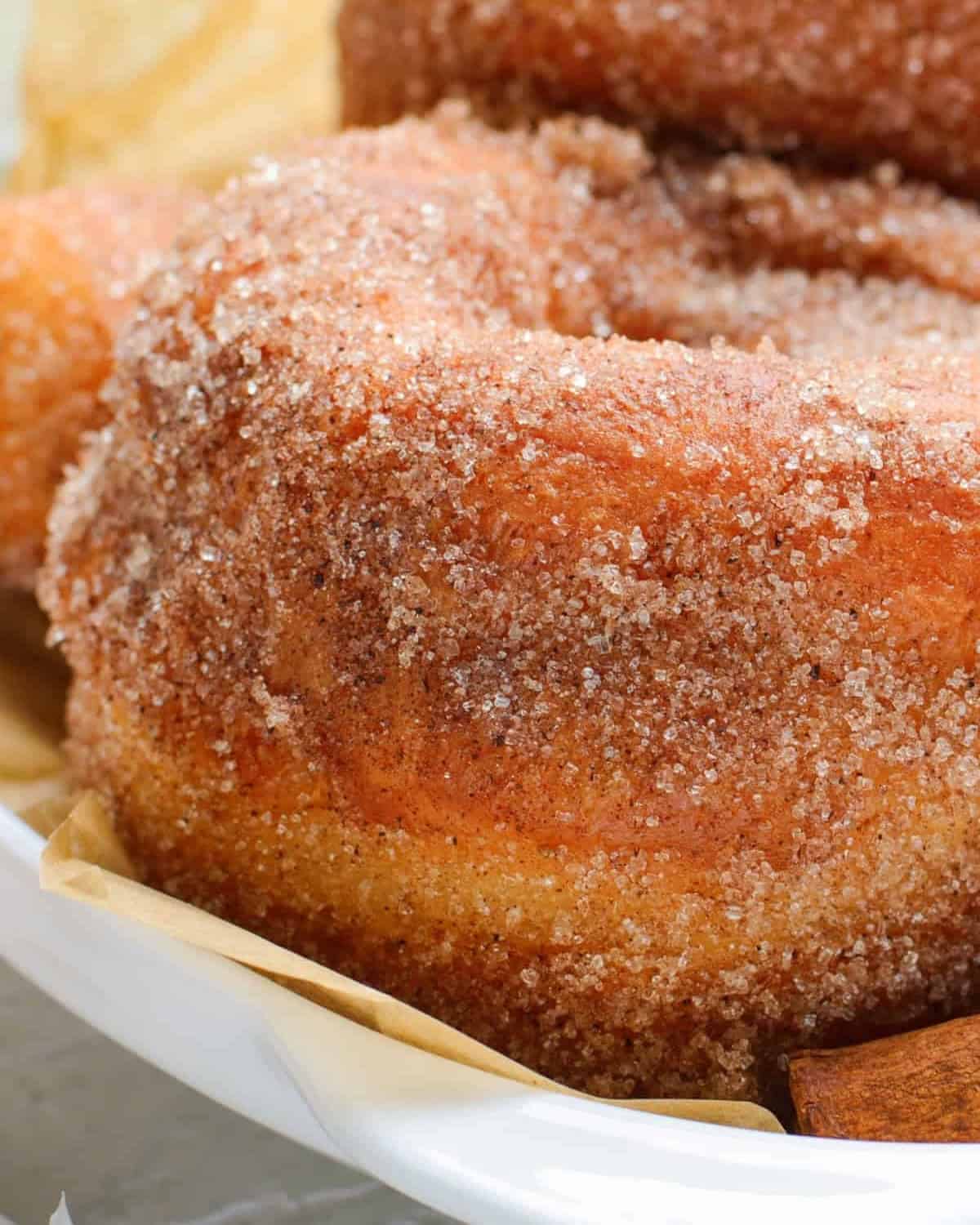
There’s nothing quite like the aroma of fresh cinnamon sugar donuts wafting through my kitchen! I used to be intimidated by deep frying, but I developed this recipe to prove that delicious homemade yeast donuts are easy enough for beginners. By using a rich, buttery brioche base, I created a crumb that is incredibly pillowy and tender, providing the perfect canvas for that crunchy cinnamon coating. This is the kind of Saturday morning breakfast everyone will be excited to wake up to!

Fried Brioche Donuts Dipped in Cinnamon Sugar
My easy cinnamon sugar donuts are all about the yeast-raised dough. It takes some time to make, but the method is simple once you get the hang of it. The butter-infused brioche-style base fries up incredibly light and fluffy with a rich flavor, and the cinnamon sugar coating is truly the icing on the cake–er, donut!
I’ve tested various flour ratios and proofing times to ensure these homemade fried donuts are foolproof for beginners. The double-rise method–once in the bowl and once after cutting–is my non-negotiable secret to their light-as-air texture. Whether you dip them, glaze them, or enjoy them plain, these brioche donuts are sure to be a family favorite!

Email this Recipe
Enter your email and we’ll send the recipe directly to you!
By submitting this form, you consent to receive emails from Easy Dessert Recipes.
Double-Dip for Maximum Cinnamon Sugar Crunch
Instead of a single coating, toss your donuts in the cinnamon sugar immediately after frying (while they’re still hot) to create a sticky base layer that anchors the flavor. Then let them rest for 2 minutes, and toss them a second time to add crunch.


Fried Cinnamon Sugar Donuts Recipe
Equipment
- Stand Mixer (optional)
- Dutch Oven
- Deep Frying Thermometer
Ingredients
- ¾ cup buttermilk lukewarm (105-110°F)
- 3 tablespoons granulated sugar
- 2¼ teaspoons active dry yeast (1 envelope)
- 3 large eggs room temperature
- 1 teaspoon pure vanilla extract
- ½ teaspoon kosher salt
- 4 cups all-purpose flour
- 9 tablespoons unsalted butter room temperature and cubed (1 stick + 1 tablespoon)
- Vegetable oil for frying*
Cinnamon Sugar Coating
- ⅔ cup granulated sugar
- 2 tablespoons ground cinnamon
Instructions
- Combine the buttermilk, sugar, and yeast in a large bowl. Whisk to dissolve the yeast. Leave for 5-10 minutes until foamy.¾ cup buttermilk, 2¼ teaspoons active dry yeast, 3 tablespoons granulated sugar
- Add in the eggs, vanilla, and salt, and stir until combined.3 large eggs, 1 teaspoon pure vanilla extract, ½ teaspoon kosher salt
- Add the flour. Mix using the dough hook attachment on a stand mixer (or by hand). Knead on low-medium speed for about 3 minutes, or until it forms a ball around the hook.4 cups all-purpose flour
- Slowly incorporate the butter cubes, one piece at a time, and knead well. The dough should to be glossy and smooth.9 tablespoons unsalted butter
- Once all of the butter is incorporated, turn the mixer up to medium speed and knead for 10-12 minutes, until smooth and elastic.
- Transfer the dough to a lightly greased bowl, cover with plastic wrap, and allow to proof in a warm, draft-free place for about 1 hour, or until doubled in size.
- Punch the dough down and turn it out onto a lightly floured surface. Use a rolling pin to roll to about ½-inch thickness, and use a donut cutter to cut out donuts (save the donut holes).
- Cover them with plastic wrap as you re-roll and cut out the remaining dough. Allow the donuts to proof at room temperature for 30-45 minutes, or until puffy.
- Fill a Dutch oven at least 2-3 inches deep with oil and heat to 350-360°F. Fry the donuts, three at a time, for 30 seconds on each side for a total of about 2-3 minutes (about 1 minute for the donut holes).Vegetable oil
- Remove donuts from the oil with the spider tool and place on a tray lined with paper towels.
- Once slightly cooled, toss each donut in the bowl of cinnamon sugar, and set aside to cool.⅔ cup granulated sugar, 2 tablespoons ground cinnamon
Notes
- Don’t skip blooming the yeast. Dead yeast will not rise.
- Ensure your buttermilk isn’t too hot, or it will kill the yeast. Dip one pinky into the liquid. If it feels warm and you can withstand the temperature for 5-8 seconds, then the mixture is the right temperature to activate the yeast.
- When rolling out the dough, as little flour as possible. Excess flour will make the donuts tough, and it can burn in the oil, giving your donuts a burnt taste. Brush off any visible flour with a pastry brush before frying.
- Cut individual squares of parchment paper for each donut. Place each cut donut on its own square to proof. When it’s time to fry, pick up the paper and drop the donut (paper and all) into the oil. The paper will peel off in seconds, and you can fish it out with tongs. This keeps the donut perfectly round and airy.
- Avoid overcrowding the pan while frying, as this decreases the oil temperature and leads to greasy, undercooked donuts.
- After you pull a batch out, wait 60 seconds for the oil to heat back before adding the next batch.
- A perfect yeast donut should have a pale ring around the middle where it didn’t touch the oil. If your donuts are submerging completely, they are likely under-proofed (too heavy).
- Make sure the donuts are still warm when you dip them in the cinnamon-sugar, or it won’t stick.
- Sift the cinnamon and sugar together to get a more uniform, clump-free mixture.
- Optionally add a pinch of kosher salt or a sprinkle of nutmeg, pumpkin pie spice, or allspice to the mix for more flavor.
How to Make Fried Cinnamon Sugar Donuts Step-by-Step
Prep: Gather up all of the ingredients you need to make these yeast donuts. Gently warm the buttermilk (I did this in the microwave for about 30 seconds), and bring the eggs and butter to room temperature for about 15-30 minutes so they incorporate more easily (you can speed this along by cubing the butter!).
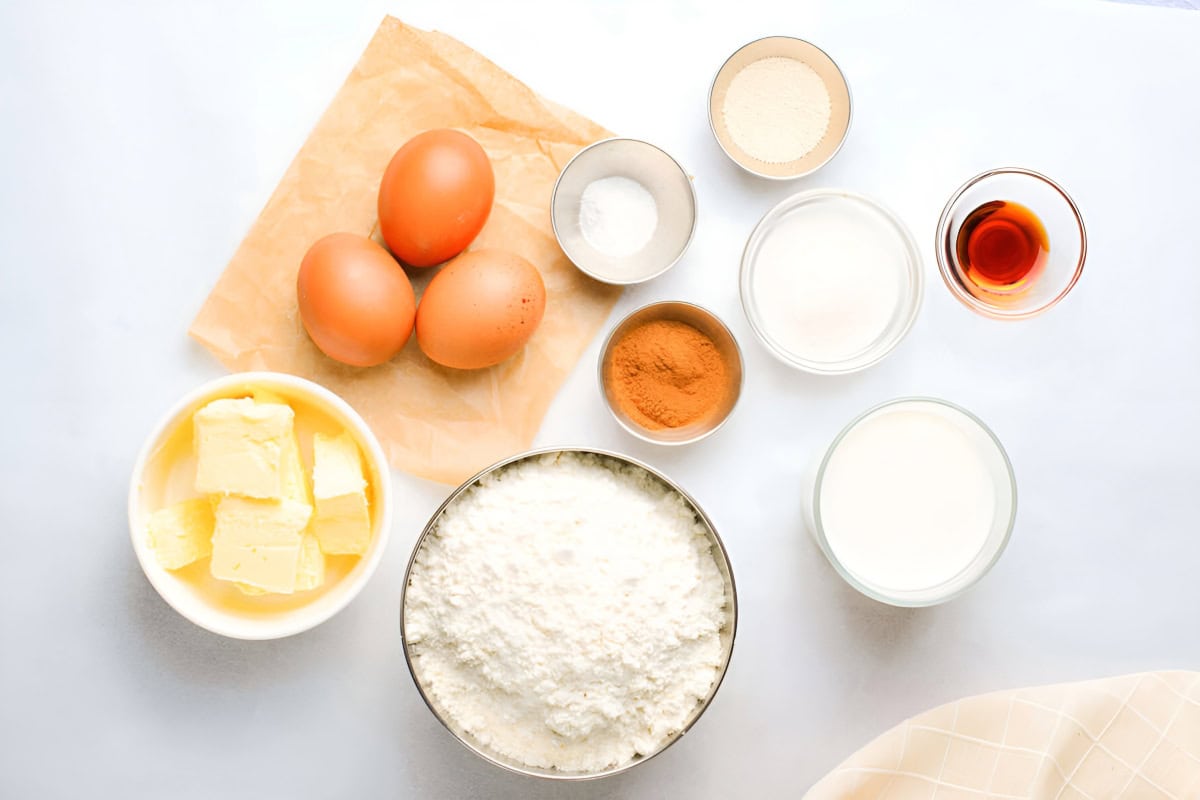
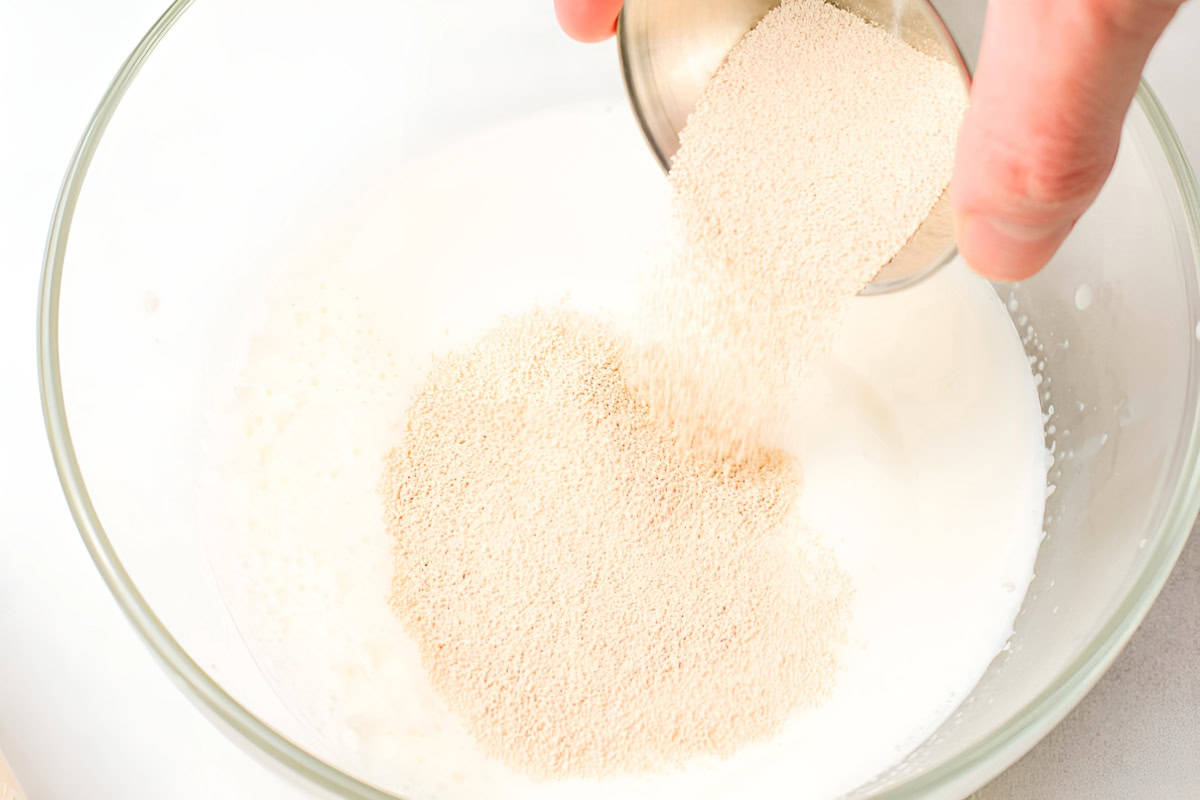
Bloom the Yeast: Combine ¾ cup of lukewarm buttermilk (about 110°F–be careful not to make it too hot or it will kill your yeast!), 3 tablespoons of granulated sugar, and 2¼ teaspoons of active dry yeast in a large bowl. Whisk to dissolve the yeast. Leave for 5-10 minutes to bloom, until foamy. If your yeast does not start bubbling and smelling yeasty, discard and start again with fresh yeast.
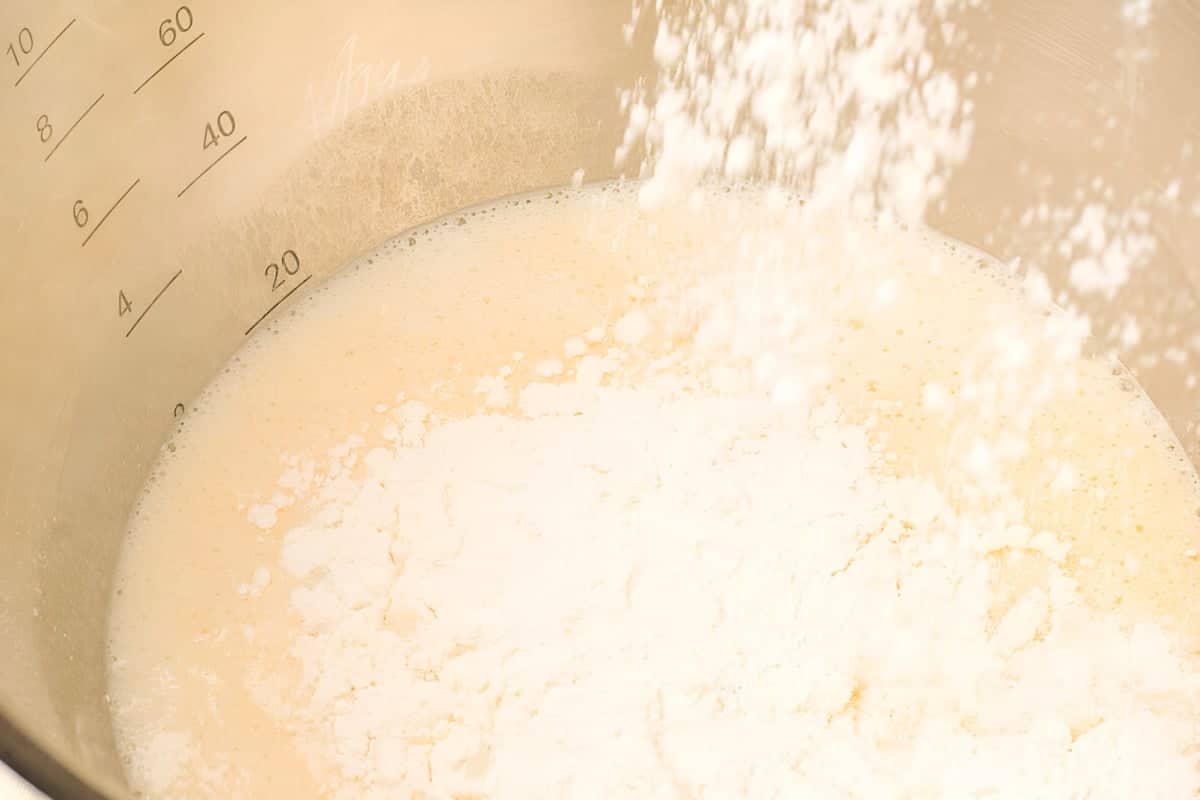
Add the Flour: Add in 3 large room-temperature eggs, 1 teaspoon of vanilla extract, and ½ teaspoon of kosher salt, and mix well to combine. Add 4 cups of all-purpose flour (spooned and leveled to avoid making the dough tough). Mix using the dough hook attachment on your mixer (or by hand). Knead on low-to-medium speed for about 3 minutes, or until it forms a cohesive ball around the hook.
Knead the Dough: Slowly incorporate 9 tablespoons of cubed room-temperature unsalted butter, one piece at a time, kneading well between each addition. The dough should to be glossy and smooth. Once all of the butter is incorporated, turn your mixer up to medium speed and knead for 10-12 minutes, or until smooth and elastic. You’ll know it’s ready when it springs back slowly when indented with your thumb.
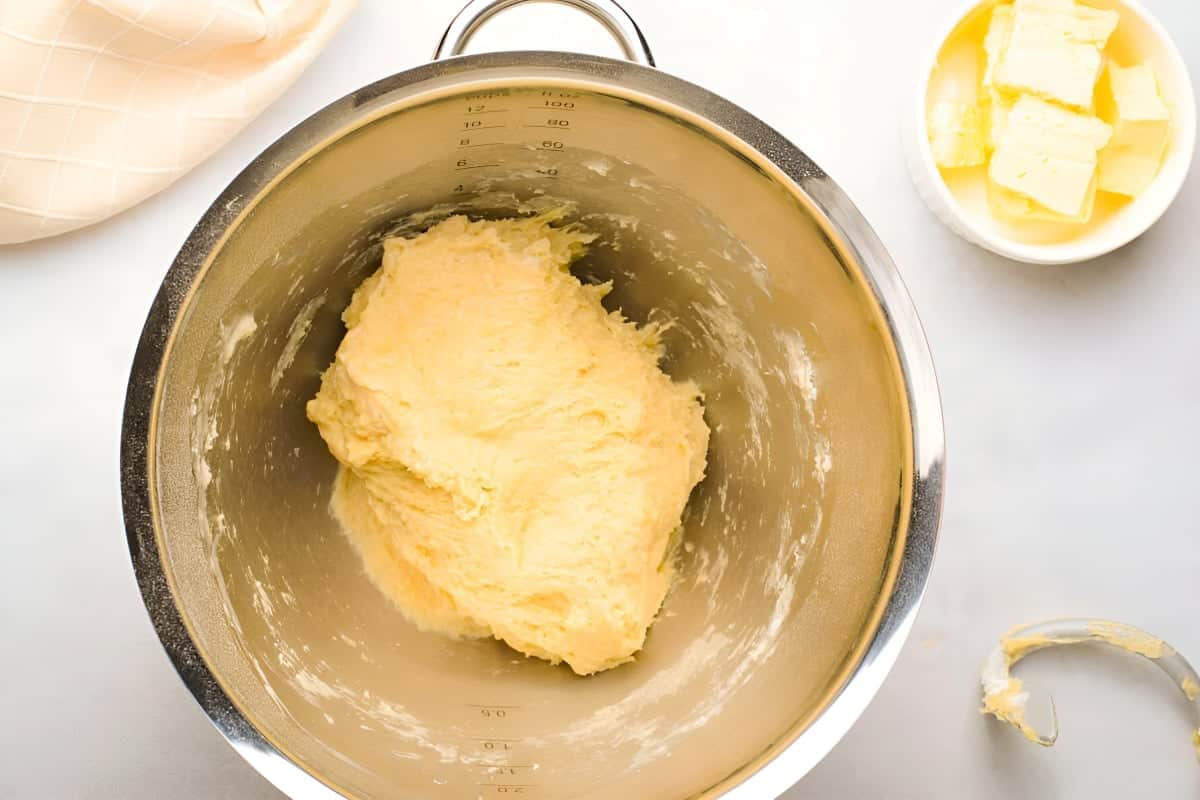
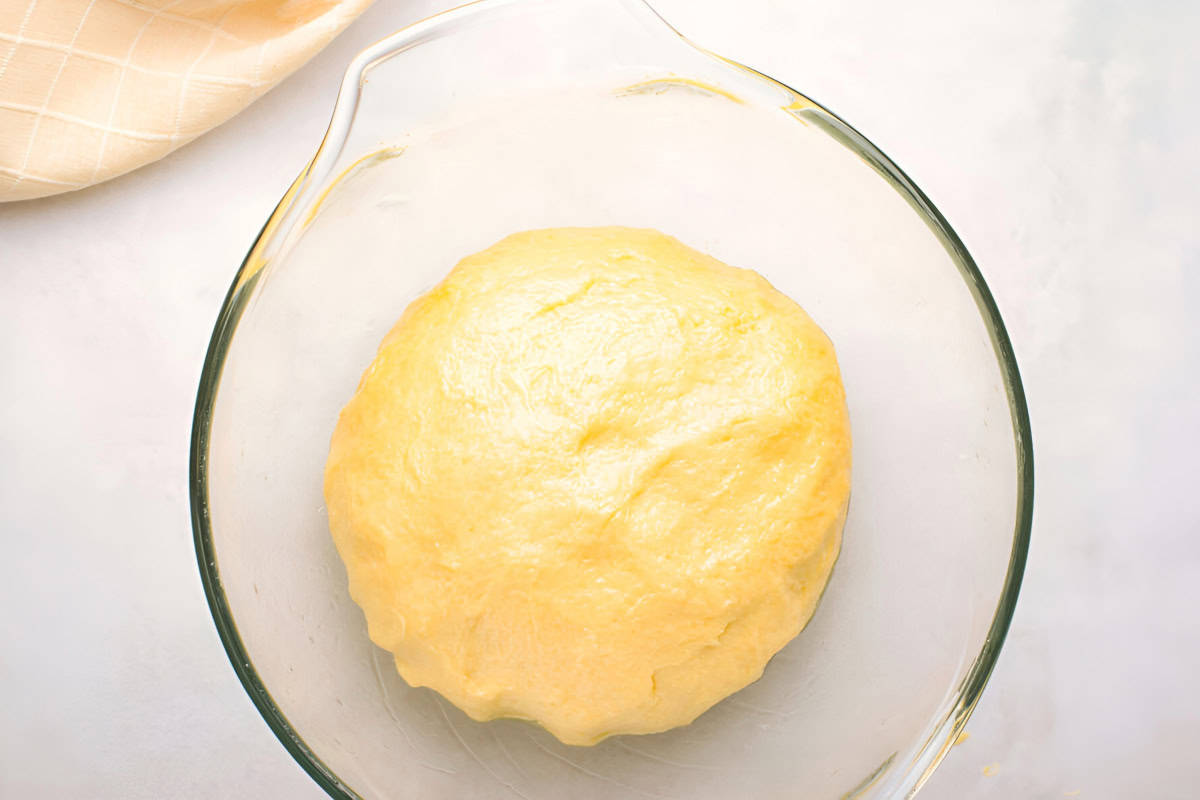
Proof the Dough: Transfer the dough to a lightly greased bowl, cover with plastic wrap (or a kitchen towel), and allow to proof in a warm, draft-free place for about 1 hour, or until doubled in size. Total proof time will vary depending on the temperature of your kitchen. Proof for a shorter time if it’s warm and humid, or a longer time if it’s cold and drafty.
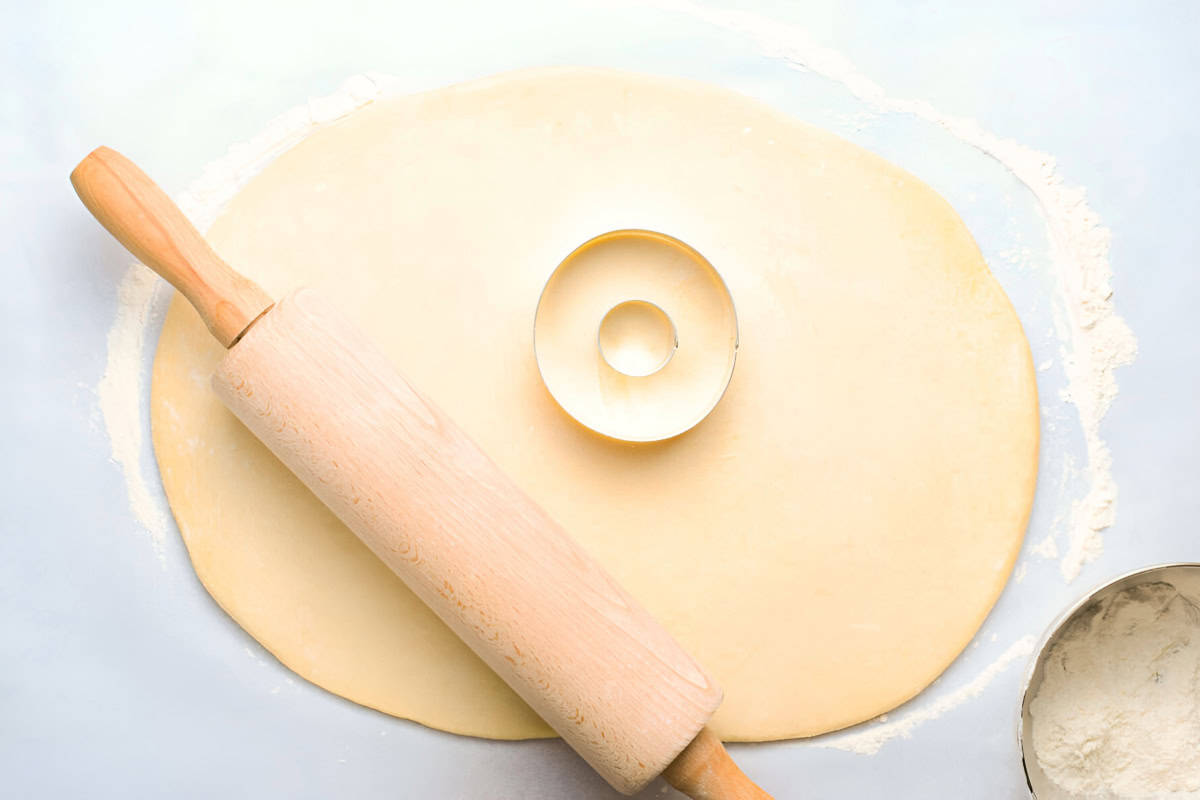
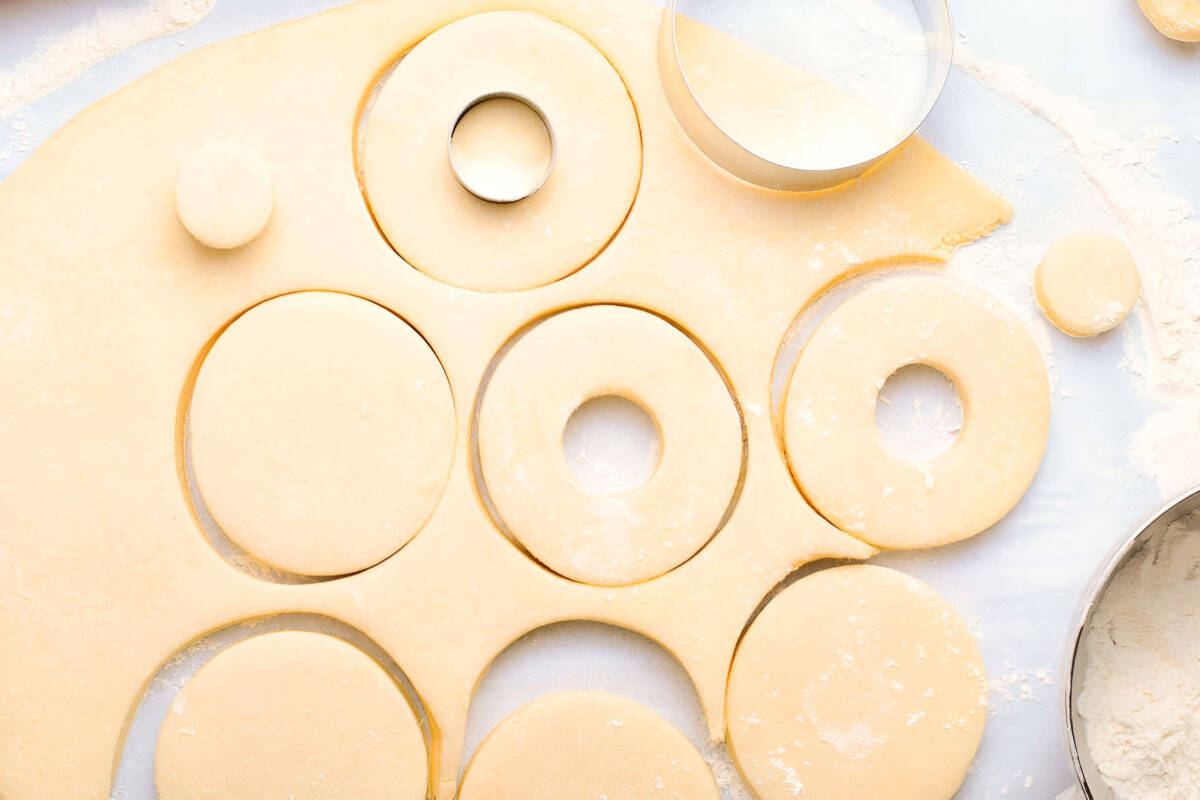
Roll the Dough: Punch the proofed dough down, and turn it out onto a lightly floured surface (don’t add too much flour, or your dough will turn out tough!). Use a rolling pin to roll to about ½-inch thickness, and use a donut cutter to cut out donuts (save the donut holes–you can fry them, too!). Try to cut with a straight up-and-down motion rather than twisting, which can compress the dough. If you don’t have a donut cutter, you can use a large drinking glass and a shot glass to get the shape.
Proof the Doughnuts: Cover your donuts with plastic wrap as you re-roll and cut out the remaining dough. Allow the cut donuts to proof at room temperature for 30-45 minutes, or until puffy. Again, this may take more or less time depending on the temperature of your kitchen.
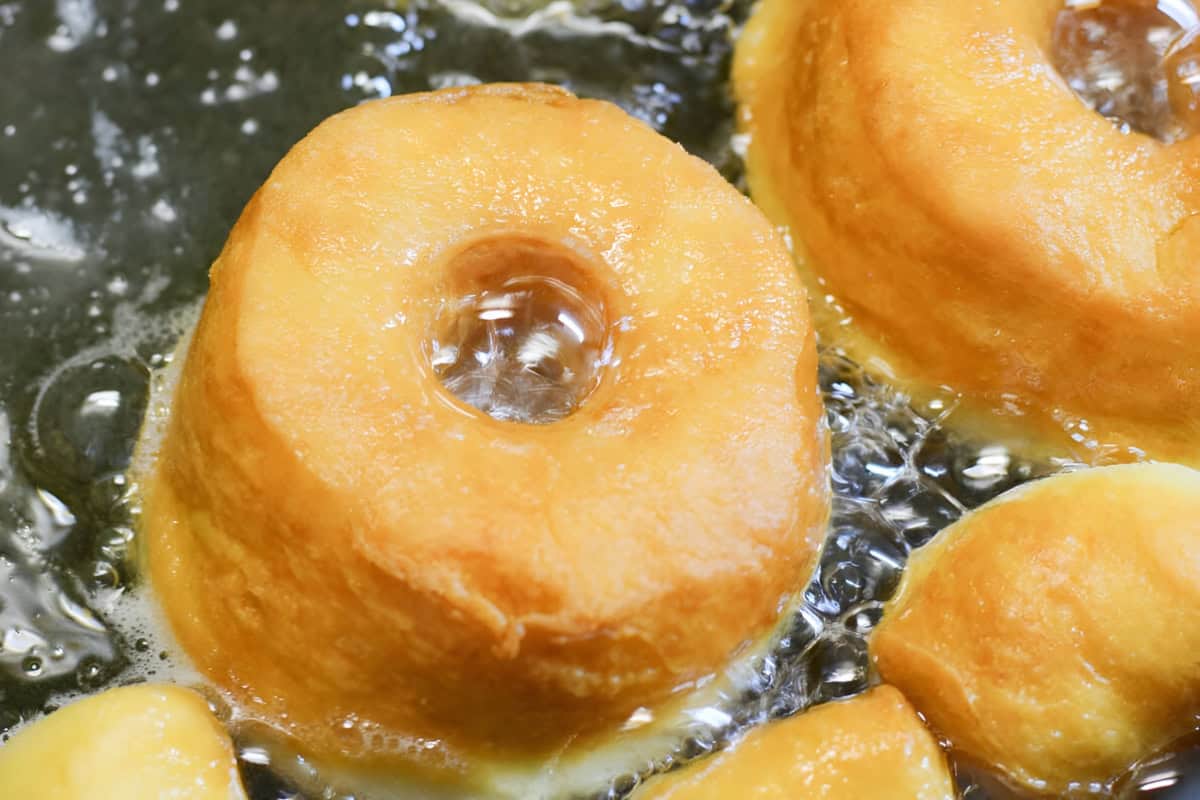
Fry the Donuts: Fill a Dutch oven at least 2-3 inches deep with vegetable oil, and heat it to 350-360°F (I recommend using a thermometer throughout to monitor the oil temperature). Fry the donuts, three at a time, for 30 seconds on each side for a total of about 2-3 minutes (about 1 minute for the donut holes). The donuts should have a white ring around their centers and float while frying. If they sink, they were underproofed–let the remaining donuts sit at room temperature for a bit longer befroe frying the next batch.
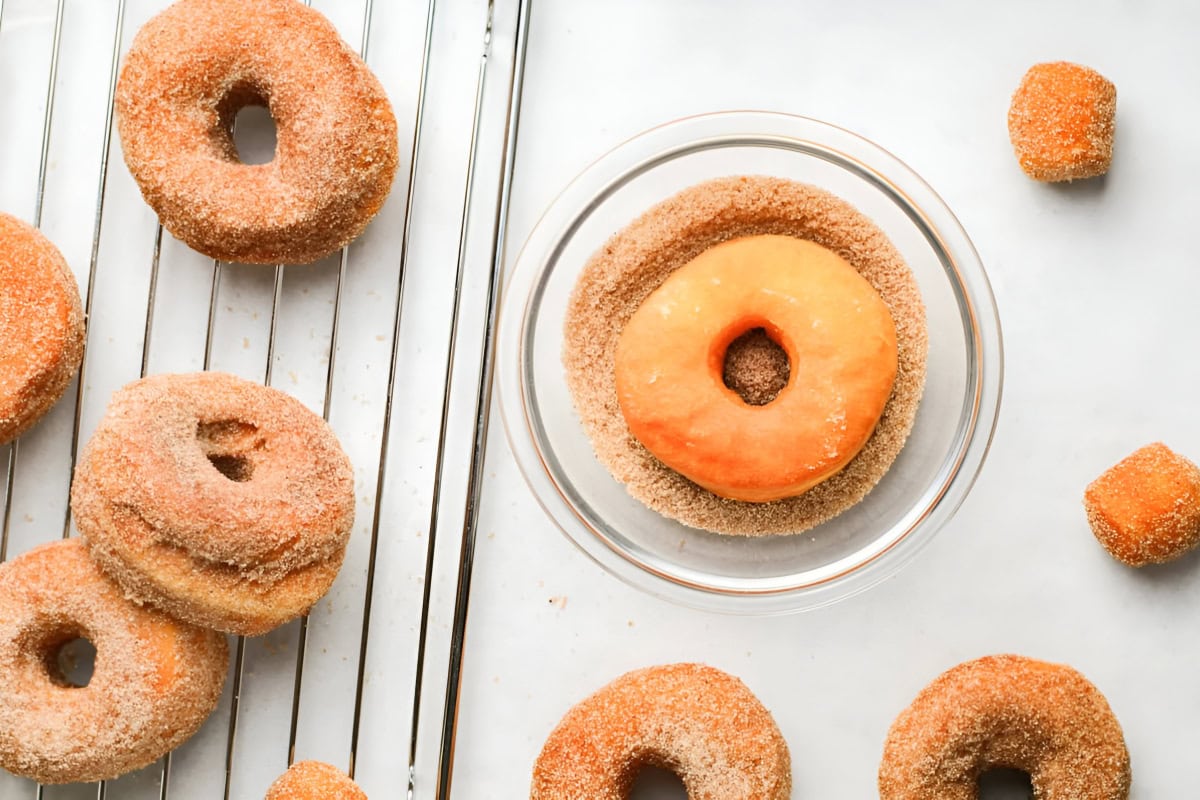
Dip the Donuts: Remove the fried donuts from the oil with a spider tool and place on a tray lined with paper towels to drain. Once slightly cooled, toss each donut in the bowl of ⅔ cup of granulated sugar mixed with 2 tablespoons of ground cinnamon, and set aside to cool. For extra flavor and crunchy, double-dip them (see my tip above!).
How to Store, Freeze, and Reheat
These cinnamon sugar donuts definitely taste best within the first 24 hours. However, you can store leftover yeast donuts in an airtight container at room temperature for up to 3 days. To freeze, wrap the fully cooled donuts individually in plastic wrap and place them in a zip-top bag to store for up to 3 months. When you’re ready for a treat, thaw them overnight in the fridge and reheat in a 350°F oven or air fryer for about 3-5 minutes.











Leave a Reply